
Christmas Cookies
The Baker’s Guide to Elf on the Shelf
Oct
The Baker’s Guide to Elf on the Shelf
As an Amazon Associate I earn from qualifying purchases.
If you sell Christmas cookies, there’s a little scout elf who might just become your best seasonal employee. Every December, millions of families wake up to find their elf in a new spot — and every December, tired parents open their wallets for anything that keeps the magic going without the midnight staging session.
That’s where you come in. But to sell to the elf crowd, you have to understand the elf. So here’s everything a home baker needs to know: the story, the rules, and exactly when to prep, post, and sell.
(A quick note: “Elf on the Shelf” is a registered trademark of Lumistella. I’m just a baker describing the tradition and how we serve the families who love it.)
The Story (The 60-Second Version)
In 2005, Carol Aebersold and Chanda Bell published a children’s picture book called The Elf on the Shelf: A Christmas Tradition, sold with a small elf doll. The premise is simple: Santa sends a scout elf to each family’s home to watch over the kids and report back to the North Pole every night. Each morning, the elf has moved to a new hiding spot, and the kids race to find it.
Twenty years later, it’s one of the biggest Christmas traditions in America. New to it? Here’s the official Elf on the Shelf set that started it all. And here’s the part that matters for your business: it runs on daily novelty. Parents are under pressure to come up with a fresh elf scene every single night for nearly a month. That’s exhausting — and exhaustion is a buying trigger.
The Rules Bakers Must Know
You don’t need to be an elf expert, but you need to know the four rules, because each one shapes how you design and package your treats:
1. Don’t touch the elf — or it loses its magic.
This is the big one. Kids are told that touching the elf drains its Christmas magic, which means the elf has to fly back to Santa for a recharge. For you, this rule is a design feature, not a limitation. Packaging that keeps the treat “untouched” — clear boxes, sealed bags, backer cards that say “look, don’t touch” — is the product. Parents will pay for packaging that protects the magic for them.
2. The elf moves every single night.
After the kids go to bed, the elf flies to the North Pole, reports to Santa, and returns to a brand-new spot. This is why “elf arrival” and “elf goodbye” treats sell so well — they bookend the season. Design products for the two big moments: the welcome (early December) and the farewell (Christmas Eve).
3. The elf arrives around December 1.
Most families start the tradition on December 1st, though plenty kick off Thanksgiving weekend. That gives you a hard marketing deadline: everything must be listed, photographed, and promoted before Thanksgiving week. After December 1, you’re selling to latecomers — still good business, but the planners buy early.
4. The elf leaves on Christmas Eve night.
After the kids are in bed on December 24th, the elf heads back to the North Pole until next year. “Goodbye” treats — a cookie with a sweet farewell note from the elf — are an easy last-minute add-on sale in the final days before Christmas.
Why This Makes You Money
Here’s the honest math of the elf economy: the tradition is beloved, but the nightly execution is work. Social media is full of parents confessing they’re skipping the elaborate setups this year. But “we’re too tired to stage a scene” is not the same as “we’re skipping Christmas magic.”
Tired parents outsource. A $5 cookie with a cute backer card delivers the same morning delight as a 45-minute midnight diorama — and it photographs just as well. That’s your pitch, whether you say it out loud or not: all of the magic, none of the midnight work.
Elf treats practically sell themselves from November through December, because the demand is built into the calendar. Parents aren’t deciding whether to do something elf-related. They’re deciding what. Make sure “what” is your cookie.
Your November–December 2026 Baker’s Calendar
Timing is everything with seasonal products. Here’s your week-by-week playbook:
Early November (Nov 1–8): Prep and photograph
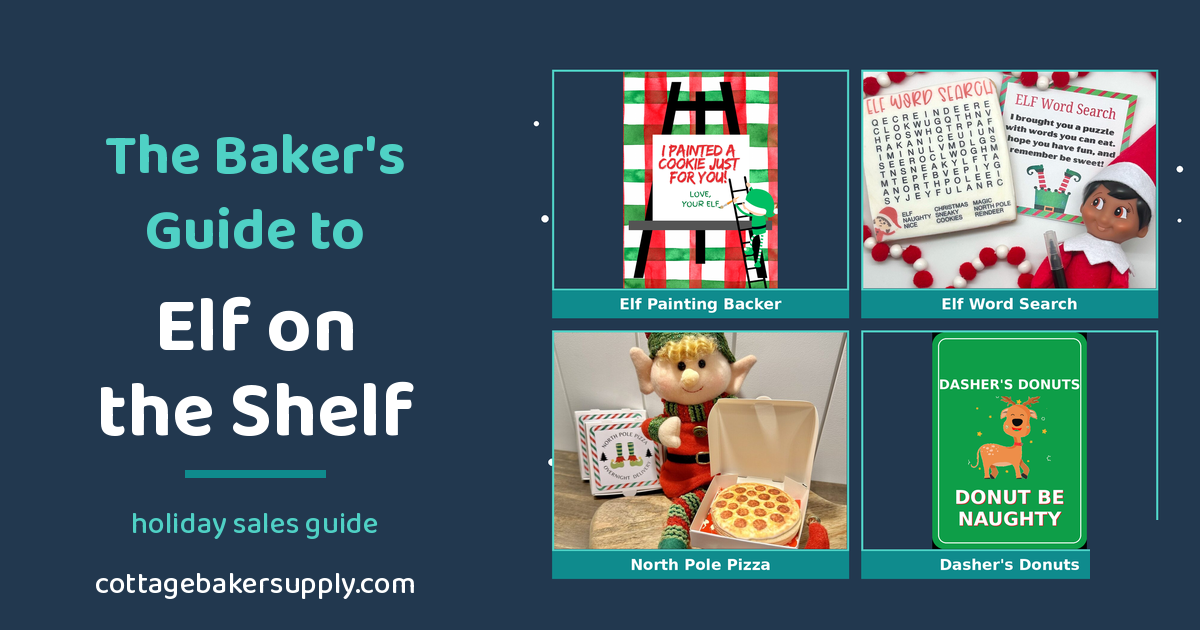
This is production week. Finalize your elf products, bake your samples, and photograph everything in good light. Get your listings live — on your website and Etsy — before you start marketing. Nothing kills momentum like a customer ready to buy and no buy button. My complete set of four elf printables (backer card, word search, pizza box, and donut set) lives in one bundle here: Complete Elf Collection. The individual sets are in my Etsy shop if you’d rather start with just one.
Mid-November (Nov 9–20): Start marketing
Parents plan ahead — the organized ones are shopping for December now. This is when your Pinterest pins go up (pins need weeks to circulate, so earlier is better), your social posts start teasing, and your email list gets a heads-up. Lead with the “arrival” angle: “Is your elf arriving December 1st? Be ready.”
Thanksgiving week (Nov 21–29): Final push for elf arrival
Thanksgiving is Thursday, November 26th — and right behind it comes December 1st. This is your last full week to capture the planners. Post daily if you can. Emphasize ordering deadlines: “Order by [your date] for elf arrival treats!” Urgency sells.
December 1–20: Peak selling season
The elf has landed, and now it’s daily magic for three weeks. Keep posting — arrival photos from happy customers are gold, so ask buyers to tag you. This is also when you pivot messaging toward the goodbye: “Don’t forget a farewell treat for Christmas Eve!” Sell both ends of the season.
December 21–24: Last-call Christmas Eve treats
Christmas Eve falls on Thursday, December 24th. These final days are for the procrastinators (said lovingly — they’re some of your best customers). Offer ready-to-go goodbye treats with fast pickup. Simple, sweet, done.
After Christmas: Rest, review, repeat
Take a breath — you earned it. Then, while it’s fresh, jot down what sold, what flopped, and what you’d do differently. That note becomes next November’s head start. The elf will be back. He always comes back.
Ready to Make Some Magic?
You don’t need to love staging tiny elf crime scenes at midnight to profit from this tradition. You just need to understand what parents are really buying: a magical morning for their kids, with zero effort on their part. That’s a product worth selling.
Grab the Complete Elf Collection and walk into the season prepared — four coordinated printable sets, ready to print, package, and sell.
Just add sprinkles!
